
Html Index
Before sophisticated databases and dynamic content were standard, basic HTML texts sometimes acted as the very first internet directories—the fundamental … Read MoreHtml Index

Internet Directory


Finding exactly what you need in the great and always growing internet cosmos can often feel like looking for a …
Know MoreInternet Directory

Types of Internet Directories Web Directories – Lists websites based on topics (e.g., DMOZ, Yahoo! Directory). Business Directories – Lists …

A web directory is a collection of websites organized into categories and subcategories to help users find relevant information. Unlike …
Resource Access refers to the ability of users within an organization to retrieve, use, and manage digital or physical resources …
A file storage directory is a structured location within a computer system or network where files and data are stored, …
An Internet directory is a structured collection of websites or resources categorized based on their content. It helps users find …

Digital marketing spending continues to grow worldwide, with data from Statista showing that global digital ad spend surpassed $600 billion in recent years. This rapid expansion reflects how essential online promotion has become for businesses of all sizes. Yet for beginners, the sheer number of tools and strategies can feel overwhelming, making it difficult to know where to start or which platforms truly deliver results.
Many new business owners struggle with visibility, especially in crowded markets. Traditional approaches such as posting occasionally on social media or relying on word of mouth often fall short. As a result, more structured solutions have emerged, ranging from SEO platforms to paid advertising networks and even niche services like community-driven promotion. Some platforms, for instance, offer engagement boost services by increasing visibility on forums, helping content gain traction in competitive discussions.
SEO tools help websites rank higher on search engines, making them easier to find. Platforms like keyword analyzers, backlink trackers, and site auditors fall into this category. Research from BrightEdge indicates that over 50% of website traffic comes from organic search, highlighting the importance of SEO.
These tools are ideal for long-term growth. They improve content quality, enhance technical performance, and align websites with search engine algorithms. However, results take time. Beginners often feel discouraged when they do not see immediate changes, but consistent optimization usually leads to steady traffic gains.
Paid ads offer a faster route to visibility. Platforms such as search ads and social media ads allow businesses to target specific audiences based on demographics, interests, and behavior. Data from Google Economic Impact Report suggests that businesses earn an average of $2 for every $1 spent on Google Ads.
Despite their effectiveness, ads require careful budgeting and monitoring. Without proper targeting, costs can rise quickly. Still, for product launches or time-sensitive campaigns, paid ads remain one of the most reliable tools for immediate reach.
Social media platforms are essential for building brand presence. Management tools help schedule posts, track performance, and engage with audiences more efficiently. Experts from Hootsuite report that consistent posting improves audience retention and brand recall.
These tools are especially useful for small teams. They reduce manual work and create a structured posting strategy. However, success depends on content quality. Simply posting frequently without a clear message rarely leads to meaningful audience interaction.
Email marketing remains one of the most cost-effective promotional methods. Reports from Campaign Monitor show that email marketing can deliver a return on investment as high as 4200%. This makes it a powerful tool for nurturing leads and maintaining customer relationships.
Beginners can use email platforms to send newsletters, promotional offers, and updates. The key challenge lies in building a quality subscriber list. Purchased or irrelevant lists often lead to low engagement and can harm sender reputation.
Content platforms help businesses create and distribute valuable information. Blog management systems, content calendars, and analytics tools fall under this category. Studies from Content Marketing Institute reveal that consistent content creation builds trust and supports long-term brand growth.
While content marketing requires effort, it offers lasting benefits. Well-written articles, videos, or guides continue to attract audiences over time. The main difficulty is maintaining consistency, especially for beginners managing multiple tasks.
Community-driven platforms, such as forums and discussion boards, provide a unique way to reach targeted audiences. Services that amplify posts within these communities can increase visibility by improving interaction signals like upvotes or comments. Alongside these methods, curated thematic internet directories offer another pathway for discovery, helping users find niche content through organized categories rather than keyword searches. Research from Search Engine Journal highlights that directories can improve visibility and referral traffic when used strategically.
These services work by enhancing initial traction, making content more noticeable to other users. The advantage lies in faster exposure within niche groups. However, there are risks. Overuse or misuse can appear inauthentic and may not align with platform guidelines. Experts from Reddit Help Center emphasize the importance of genuine participation to maintain credibility.
When used carefully, community promotion can complement other strategies. It is particularly helpful for launching discussions, testing ideas, or promoting content in highly specific niches.
Understanding performance is crucial for any promotion strategy. Analytics tools track website traffic, user behavior, and campaign effectiveness. Insights from Google Analytics help businesses identify what works and what needs improvement.
These tools provide clarity. Instead of guessing, businesses can make data-driven decisions. The challenge for beginners is interpreting the data correctly. Learning basic metrics such as bounce rate, conversion rate, and session duration can make a significant difference.
Online promotion is rarely about using a single tool. Instead, success comes from combining different strategies based on specific goals. SEO builds long-term visibility, ads provide quick exposure, and community-based approaches can enhance audience interaction.
For beginners, the key is to start small and scale gradually. Focus on one or two tools, measure results, and refine the approach over time. As confidence grows, integrating additional methods can lead to stronger audience engagement, better reach, and sustained digital growth.
Ultimately, online promotion is both an art and a system. By understanding the strengths and limits of each category, businesses can create a balanced strategy that supports consistent visibility and meaningful connection with their audience.
In a growing metropolitan area like Brisbane, maintaining a home’s exterior is more than cosmetic, it’s more of a protection. Humid subtropical weather encourages mold, algae, and grime to accumulate quickly on siding, roofs, and driveways. House washing in Brisbane has become an essential service for homeowners looking to preserve both curb appeal and structural integrity.
But finding the right provider no longer depends solely on neighbor recommendations. Increasingly, Brisbane residents turn to online directories, structured digital platforms that organize local service providers into searchable, comparable listings. The inception of these platforms showed how internet directories streamlined local decision-making and helping general public to make the right choice.
Traditionally, homeowners found exterior cleaning services through word-of-mouth referrals. While personal recommendations still carry weight, digital directories expand the search radius and introduce new layers of transparency.
Online listings categorize Brisbane house washing services by suburb, ensuring location-specific results.
Whether a homeowner lives in Paddington, Carindale, or Indooroopilly, directories filter providers who actively service those areas. This geographical sorting prevents wasted inquiries and improves response times.
Beyond location, filters allow users to narrow options by specialization. Some companies focus on high-pressure driveway cleaning. Others specialize in soft washing for delicate painted surfaces or roof cleaning for tile and metal materials. Instead of calling multiple providers for clarification, homeowners can quickly compare specialties within a structured database.
One of the strongest advantages of online directories is comparative clarity. Listings often include certifications, insurance information, years in operation, and customer ratings. This structured presentation empowers homeowners to evaluate professionalism at a glance.
Customer reviews further enhance transparency. Verified ratings provide insight into punctuality, quality of work, and overall satisfaction. While no review system is perfect, aggregated feedback gives homeowners a broader perspective than a single personal recommendation.
Pricing transparency is another growing feature. Some directories encourage providers to publish starting rates or offer instant quote requests. Even when exact prices vary by property size and condition, indicative pricing helps set expectations before direct contact is made.
Not all house washing methods are equal, and directories help clarify these distinctions. Online listings often categorize services under headings such as:
This categorization reduces confusion for homeowners unfamiliar with technical differences. Pressure washing may be ideal for concrete driveways, while soft washing, using lower pressure and specialized detergents, is safer for delicate exterior finishes.
By presenting these categories clearly, directories educate consumers while simplifying their search.
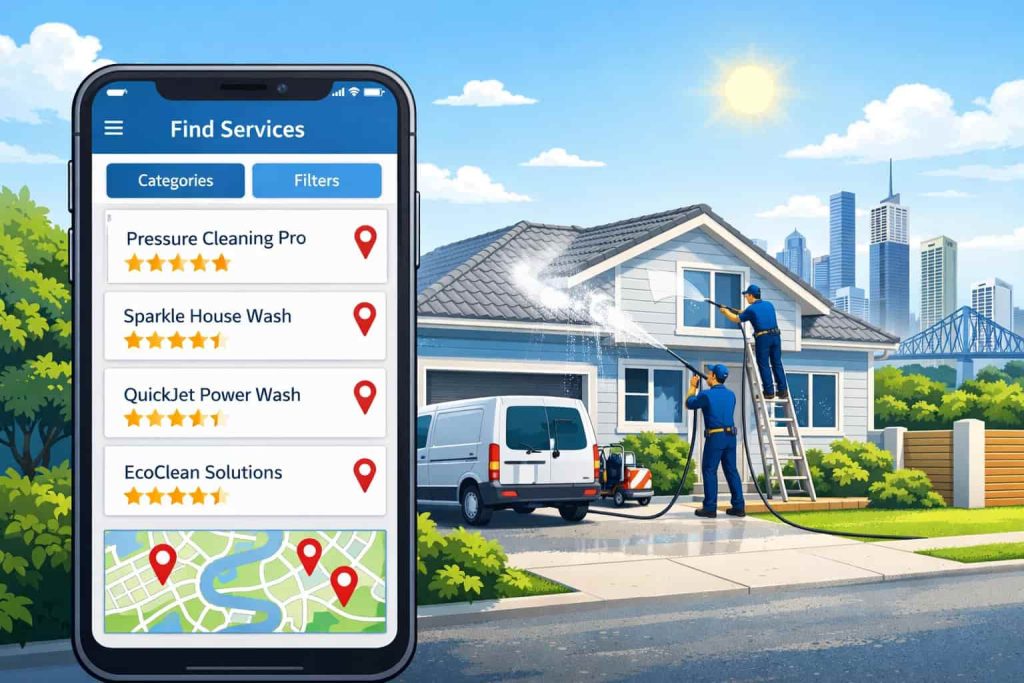
Another defining feature of reputable directories is verification. Some platforms confirm business registrations, require proof of insurance, or validate contact information. This added layer of credibility reduces the risk of engaging unlicensed or unreliable operators.
Additionally, internet directory platforms often allow direct messaging or quote requests within the system. This keeps communication centralized and traceable, offering both convenience and accountability.
House washing in Brisbane illustrates how digital organization improves local service discovery. Instead of sifting through scattered search engine results, homeowners access structured databases that sort providers by suburb, specialization, ratings, and credentials.
This directory-driven approach saves time while increasing confidence. It transforms what could be an overwhelming search into a logical, step-by-step comparison process. In a climate where regular exterior cleaning protects property value, efficient access to reliable professionals matters.
http://bing.com
 The internet has become crowded with websites, businesses, creators, and online communities competing for attention. Because of this, visibility matters more than ever. People want their websites to appear in search results, their businesses to gain traffic, and their communities to attract active members. One of the oldest tools used to improve discoverability online is the internet directory.
Internet directories organize websites, businesses, services, and communities into searchable categories. Before modern search engines became dominant, directories played a major role in helping users discover useful websites. While search engines now lead most online discovery, directories still remain valuable for niche industries, local businesses, and online communities looking to improve visibility.
Discord communities have also become part of this digital ecosystem. Many servers now use public listing platforms and directory-style websites to attract new members. Because competition is strong, some server owners look for services like DiscordBooster to increase visibility and make their communities appear larger or more active.
However, just like websites and businesses, online communities depend heavily on trust and authentic engagement. Visibility alone does not guarantee success. Communities grow sustainably when people genuinely participate, contribute value, and feel connected to the environment.
Internet directories organize information so users can find relevant communities more easily. Instead of randomly searching through social media platforms, people can browse categories based on their interests.
For example, someone looking for gaming communities can search gaming categories. Artists may explore creative communities. Students may search educational groups. This structure makes discovery faster and more organized.
Directory websites are still useful today because they help niche communities reach targeted audiences. A smaller server focused on art, wellness, law, farming, or local interests may struggle to compete directly against massive online platforms. Directories help these communities become more visible to users already interested in their topic.
Discord communities often use public listings and promotional sites to gain exposure. Many server owners optimize descriptions, banners, and tags to attract new members. Some also explore visibility tools or promotional services connected to terms like DiscordBooster because they want to grow faster.
At first glance, increasing visible numbers may seem beneficial. Larger communities often appear more active and trustworthy. New users may assume that a server with thousands of members provides more value than a smaller one.
However, online communities function differently from simple advertisements. People usually remain active because they enjoy conversations, trust the environment, and feel emotionally connected to the group.
Discord itself explains through its platform safety policies that artificially inflating engagement or server membership can violate platform guidelines. This means artificial growth strategies may create long-term credibility risks instead of sustainable success.
Directories can help communities gain visibility, but they cannot replace genuine interaction. A well-listed server still needs active conversations, responsible moderation, and meaningful participation to retain members.
Authenticity becomes especially important because internet users are becoming more aware of fake engagement online. Many people can quickly recognize inactive communities where numbers do not match actual activity levels.
The internet is filled with communities competing for attention. Because of this, many people focus heavily on appearance and metrics. Member counts, follower numbers, and visible activity often become status symbols.
However, strong online communities are built through engagement quality rather than size alone. A server with a smaller but active community often provides far more value than a massive server filled with inactive users.
This is especially true for niche communities listed in internet directories. Users who join specialized servers usually want meaningful interaction related to specific interests. They are not simply looking for large crowds. They want useful conversations and authentic participation.
For example, a digital art community succeeds when artists actively share work and feedback. A study group becomes valuable when students help one another consistently. A wellness server grows stronger when members provide support and motivation.
Artificial visibility strategies rarely create these experiences. Even if services associated with DiscordBooster temporarily improve visible numbers, they cannot create real emotional connection between members.
Healthy moderation also plays a major role in long-term success. Communities need clear rules, respectful discussion, and active leadership to maintain trust. Without moderation, even highly visible servers can quickly become toxic or inactive.
Consistency matters as well. Communities remain healthy when administrators regularly create opportunities for engagement. Events, discussions, educational content, and collaborative activities help members stay connected over time.
Transparency builds credibility. Users appreciate communities that clearly explain their purpose, rules, and goals. Honest communication encourages stronger trust because members know what to expect.
Directories may help people discover a server initially, but retention depends entirely on the member experience afterward. Users remain in communities where they feel respected, informed, entertained, or emotionally supported.
Internet directories themselves also depend on trust. People use directory platforms because they expect organized and relevant recommendations. If directories become filled with misleading or low-quality listings, users lose confidence in them quickly.
The same principle applies to Discord servers. Visibility attracts attention, but authenticity keeps people engaged.
The internet changes constantly, but one thing remains consistent: people value genuine connection. Whether someone joins a business forum, gaming server, wellness group, or educational community, they usually stay because of human interaction rather than numbers alone.
Successful online communities understand this clearly. They focus on creating environments where members feel comfortable participating and contributing.
Clear community identity helps attract the right audience. Internet directories work best when communities accurately describe their purpose and content. Misleading descriptions may generate clicks temporarily, but they usually create poor retention because users feel disappointed after joining.
High-quality content also improves long-term growth. Educational resources, discussions, live events, tutorials, and collaborative activities give members reasons to stay active. Communities that consistently provide value naturally grow stronger over time.
Leadership quality strongly affects community health. Good administrators and moderators encourage respectful interaction while maintaining organization and fairness. Members are more likely to remain active when they trust the people managing the server.
Partnerships and collaborations can also help communities expand organically. Working with creators, educators, businesses, or other servers introduces new users who are genuinely interested in the topic being discussed.
One major mistake many communities make is treating growth as purely numerical. Trying to rely too heavily on artificial visibility tools or services associated with DiscordBooster may create temporary attention, but sustainable communities require much deeper foundations.
Real engagement grows through relationships. Members invite others because they enjoy the environment and believe the community provides real value. This creates stronger long-term loyalty than artificial methods ever could.
Technology will continue changing how people discover online spaces. Internet directories may evolve alongside search engines, recommendation systems, and social platforms. Discord communities will likely continue growing because people increasingly want interactive spaces centered around shared interests.
However, the basic principles of strong communities will not change. People still value honesty, respect, support, and meaningful interaction. Authenticity creates trust, and trust creates sustainable growth.
The strongest communities are rarely built overnight. Like successful businesses or respected websites, healthy Discord servers usually grow steadily through consistency and quality experiences.
Nearly every driver in San Antonio will face a chipped or cracked windshield at some point, and choosing the right service can save time, stress, and money. With busy schedules and long commutes, residents want dependable technicians who come to them and finish the job right the first time. Using a well-structured directory of services can help drivers compare providers and make informed decisions. To understand how directories organize features and listings for easy navigation, learn more about web directories. This curated guide highlights the best mobile and on‑site windshield and auto glass services in the San Antonio area for 2026.
One of the highly regarded local choices is Limitless Auto Glass, known for quality windshield work and customer care. To explore their offerings and schedule a front glass service. Their team brings tools and materials to your home or office for convenience, making them a standout among mobile auto glass replacement providers.

Auto glass replacement should be straightforward, affordable, and reliable, bringing peace of mind to every driver’s journey.
Mobile auto glass replacement has become popular because it lets you stay on schedule. Instead of arranging a tow or spending hours in a waiting room, technicians arrive with the parts and expertise needed. Most services handle everything from minor chip repair to full windshield installation. Driving with a damaged windshield can be unsafe and against Texas safety standards, so prompt service matters.
Many companies listed below offer free estimates, flexible appointments, and warranties on workmanship. Prices can vary by vehicle type, severity of damage, and whether the glass is OEM (original equipment manufacturer) or aftermarket, so comparing providers helps you get the best value.
Each provider serves San Antonio and surrounding suburbs, but they differ in specialties and perks. Some focus heavily on fast turnarounds. Others pride themselves on premium glass options or extended warranties. Here’s a quick comparison to think about:
Before scheduling auto glass replacement, consider these tips to make a confident choice:
San Antonio drivers often highlight responsiveness and professional behavior when talking about their windshield and glass services. For example, customers appreciate reminders before appointments, clear breakdowns of labor and parts, and technicians who explain what they are doing. Even a simple courtesy call when the team is en route can boost trust.
On the flip side, a few negative experiences often trace back to miscommunication about appointment windows or unclear warranty terms. That’s why asking questions upfront matters. A reputable service is happy to walk you through each step and answer concerns before work begins.
When your windshield or auto glass needs attention, prompt action pays off. Crack size, location, and depth influence whether repair or full replacement is safest. Minor chips can often be filled, keeping your original glass. Larger cracks or damage near the edges usually mean replacement is necessary for structural integrity.
Choosing from a vetted list of technicians gives you a solid starting point. Whether you value convenience, price, or premium parts, San Antonio has reliable options to fit your needs. With mobile appointments and clear estimates, getting back on the road with a safe, clear windshield is easier than ever.
For dependable care and a team that comes to you, mobile auto glass replacement can be a practical choice. As you weigh your options and check quotes, remember that safety and quality matter most. A well‑installed windshield protects you during daily drives and long road trips alike.
Consider the services above as you plan for your next auto glass appointment in San Antonio. With informed choices and trusted technicians, you’ll find the right fit for 2026 and beyond.

The increasing importance of Wingclub168 in the realm of personal development illustrates the digital visibility of a site and the importance of such a site being included in high-quality thematic Internet directories.
As more Internet users look for organized lists and reliable sources of specific knowledge, having a strong online presence and being recognized in respected collections is different from just being found through a regular search.
For a content site predicated on guidance, clarity, and self-improvement, visibility in a directory is not merely a function of visibility; it is the essence of validation.
Although search engines have always been the go-to resource for information, their volume can also create a loss in relevance.
Thematic Internet directories allow a user to engage from a more tailored entry point, which is invaluable if they do not wish to sort through a myriad of irrelevant content.
Creators of self-growth insights, directional finance, or life-skills frameworks gain a distinct advantage by being included and visible in directories devoted to education, personal development, and general information, as this helps their content reach a deliberate and focused audience.
This focus on specific data sets also aids in connecting with an audience. Categorization increases the likelihood of users connecting with the data, as it fosters trust in the underlying theme.
Additionally, the authority cited for information within certain themes enhances the data’s credibility, making it a key resource for content-focused platforms.
Many established directories employ editorial reviews, a framework for categorization, or criteria for quality benchmarks. When a resource appears in these curated directories, users will perceive an additional endorsement of reliability.
This directory endorsement may significantly enhance a user’s perceived credibility and utility of the resource when the directory is focused on insights related to improving life or financial literacy.
While search engines do provide exposure based on defined algorithms, directories offer a human touch. This ultimately helps build a layered digital authority, where reputation and reach are positively impacted by the editorial and automated classifications.
ALSO READ: When a Pop Culture Platform Transforms Into the Internet’s Most Engaging Fan Directory
Businesses that rely exclusively on search engines may miss out on broadening their visibility. Thematic directories give content platforms another way to provide users with resources, broadening how users find resources.
For content platforms, retaining strategic diversification is a best practice for avoiding heavy reliance on a single entry point for traffic.
The more a content platform is included in directories, the more likely it is to experience referral traffic from users that appreciate the listing of resources instead of a search function.
Directories not only contribute to potential referral traffic but also enhance digital equity. Algorithms may change, and search queries may shift, but directories remain, often providing visibility to platforms that truly offer educational value.
Increasing the number of resource listings consecutively builds trust. Content platforms benefit from the content validation and trust paired with other vetted resources. Users benefit from validated content when drawing their content from educational and informational resource directories.
This trust and credibility enhances engagement on the first visit and encourages users to browse more content. Thematic directories help build an ecosystem that combines discovery and engagement.
With the increasing importance that digital audiences have placed upon thematic Internet directories, offering a strategic layer of visibility and curated pathways to valuable information, inclusion increases credibility and improves user targeting to broaden discovery channels and allows content-driven platforms to gain a multi-faceted prowess to flourish in an information-rich environment.

Digital platforms are witnessing a shift to serve their customers and audiences and understand their needs better. Dr Horrible, a pop culture website, is building a thematic curated directory of the Internet that allows users to navigate different fan worlds with more clarity, creativity, and intention.
The site draws energy and humor from narrative-driven webpages such as DrHorrible.com, making it an excellent example of how curation can expand fandom rather than constrain it.
Fans move quickly. They jump from one franchise or forum to different characters, from lore to behind-the-scenes. The Internet can often feel messy when fans are searching for information, and it can often feel overwhelming.
A uniquely structured site built around a curated directory provides fans with entertainment and services without having to put out the energy.
The organized interface of the site provides entertainment without feeling overwhelming. The humor and creativity of the platform are layered with the organization that fans desire. The appeal likely lies in a directory that feels more engaging than traditional directories.
Once a website adopts an identity and voice, it breathes personality even into the sections it tagmatically chooses and arranges.
A platform understood by a segment of an audience is generally trusted by that audience and saves them the trouble of seeking recommendations on the platform.
This is similar to the charisma of many long-lived niche sites, a balance of quirky humor, observational comedy, and delightful respect for the subject.
This results in a directory that is more than a list of things. It is a directory that knows the audience and the subject.
ALSO READ: The Features Of Web Directories
Becoming a directory of the internet is never about the indiscriminate collection of links. It is about the construction of meaningful relationships with certain links.
A well-coordinated platform is no longer an abandoned repository. It amplifies the useful links, resferencing the ones that help fans construct a multilayered understanding of a subject, while keeping the excess, on the internet, out of the gray zone.
Be it access to a community, an archive, a creator, or the many, the directory transforms into a link to the valuable.
Above all, it is the uncurated fans that lose on the hidden corners of the internet. In that sense, it is also a narrative component of the directory.
Fans trust passion and voice. As fans evolve, the entertainment and organized discovery offered deepens the relationship. It indicates that directories can and should be more than cold, purely functional tools.
They can also be engaging, useful, and culturally relevant.
With more and more sites testing personalization, we might be on the brink of seeing internet directories that are less like filing cabinets and more like clubhouses for fans, curated by people that actually understand the community.
A web directory is a collection of websites organized into categories and subcategories to help users find relevant information. Unlike search engines, which use automated bots to index web pages, web directories are typically curated by humans who review and classify websites based on their content.
Features of Web Directories:
Categorization – Websites are grouped into topics like Business, Technology, Health, Education, etc.
Human-Curated – Entries are manually reviewed to ensure quality and relevance.
Hierarchical Structure – Users can navigate through broad categories down to specific subcategories.
Not Keyword-Based – Unlike search engines, users browse rather than type specific queries.
Types of Internet Directories
Web Directories – Lists websites based on topics (e.g., DMOZ, Yahoo! Directory).
Business Directories – Lists companies and services (e.g., Yellow Pages, Yelp).
Domain Name Directories – Helps find domain names and their owners (e.g., WHOIS directories).
FTP Directories – Lists publicly accessible files on FTP servers.
Email Directories – Collections of email addresses (mostly outdated due to privacy concerns).
Unlike search engines, directories are often curated by humans, ensuring higher quality but requiring more maintenance.
An Internet directory is a structured collection of websites or resources categorized based on their content. It helps users find relevant websites by browsing through categories rather than using keyword-based searches like a search engine.
Resource Access refers to the ability of users within an organization to retrieve, use, and manage digital or physical resources securely and efficiently. In the context of an internal directory, resource access is about who can access what within a company’s systems, based on roles, permissions, and security protocols.
Key Aspects of Resource Access in an Internal Directory:
User Authentication & Authorization:
Ensures only authorized personnel can access certain files, systems, or data.
Uses authentication methods like passwords, multi-factor authentication (MFA), or single sign-on (SSO).
Role-Based Access Control (RBAC):
Employees get access based on job roles (e.g., HR staff can access employee records, but regular employees cannot).
Helps prevent unauthorized data breaches and protects sensitive company information.
Types of Resources Managed in Internal Directories:
Documents & Files – Access to shared drives, company policies, reports.
Software & Applications – Permissions to use business tools like CRM, ERP, or project management software.
Network & Systems – Entry into VPNs, internal databases, or cloud platforms.
Physical Access – Badge access to office spaces, meeting rooms, or secure facilities.
Access Logs & Security Monitoring:
Tracks who accessed which resource and when.
Helps detect unauthorized access and prevent security risks.
Here are Core Functions of an Internal Directory:
People Directory: A searchable list of employees with details like names, job titles, departments, and contact information.
Organizational Hierarchy: Displays reporting structures and team compositions.
Resource Access: Links to shared documents, tools, and internal portals.
Communication Hub: Integrates with email, messaging apps, and phone systems.
Why It’s Important:
Improves Communication: Quickly find and contact the right person.
Enhances Collaboration: Understand team structures and expertise.
Streamlines Operations: Reduces time spent searching for internal information.
An internal directory is a centralized system or database used within an organization to store and manage structured information about employees, departments, and resources. It serves as a private, organization-specific tool to facilitate communication, collaboration, and operational efficiency.
A file storage directory is a structured location within a computer system or network where files and data are stored, organized, and accessed. It functions as a container for files and subdirectories, helping users and applications manage digital content efficiently.
Types of File Storage Directories:
Local Directories
Network Directories
Cloud Storage Directories
System Directories
Functions & Benefits:
✅ Organization – Helps categorize files in a structured way.
✅ Access Control – Permissions can be set to restrict or allow access.
✅ Data Management – Enables easy backup, retrieval, and storage of files.
✅ Collaboration – Shared directories help teams work on files together.
Facilitate communication, streamline workflows, and improve collaboration. Here’s how it’s typically used:
Employee Profiles – Contains names, job titles, departments, locations, contact details (email, phone, extension), and sometimes photos.
Organizational Structure – Shows reporting lines, department hierarchies, and team structures.
Search & Filtering – Allows employees to quickly find colleagues based on department, skills, or job role.
Permissions & Access Control – Ensures that only authorized users can access sensitive employee information.
Integration with Communication Tools – Links with email, chat apps, and phone systems for seamless contact.
Internal Announcements & Updates – Can be used to share important company-wide messages.
Here is some idea that about how Internal communication and making it easy to find and contact the right person.
✅ Enhances team collaboration by providing visibility into who works where.
✅ Streamlines HR processes by centralizing employee information.
✅ Increases efficiency by reducing the time spent searching for colleagues’ contact details.
https://www.inter800.com
An internal directory is a structured listing of employees, teams, and departments within an organization. It helps facilitate communication, streamline workflows, and improve collaboration.